Most car owners, whether personal or company, and drivers, don’t think about their car until something goes wrong. And even then, the goal is simple: fix it fast, spend less, and move on. But that mindset? It’s exactly what keeps drivers stuck in a loop of breakdowns, wasted money, and quiet frustration. Something has to change, and in expert car care centers, it already has. Traditionally good enough car care is no longer fulfilling enough.
- Research-Led Auto Diagnostics: More Than Tech, Killing the Guesswork Culture
Here’s the uncomfortable truth when it comes to car repair: throwing parts at a problem isn’t fixing it, it’s gambling with your money. A lot of repair experiences fail because someone is guessing. Not maliciously, but habitually.
It might feel productive. Something’s wrong, a component gets swapped, the issue seems to disappear for a while. But underneath that quick win is a deeper problem that was never actually understood. And sooner or later, it comes back. Sometimes louder. Always more expensive.
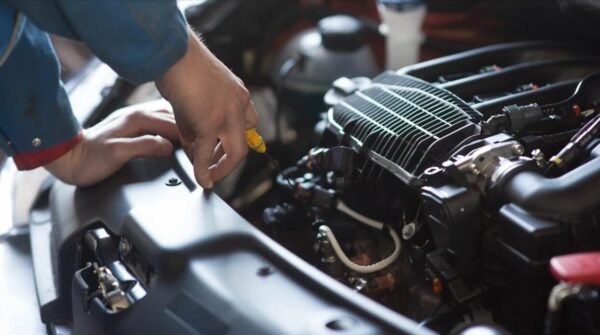
Now imagine walking into a Car Inspection Virginia Beach VA car clinic where guessing is unacceptable; where every car issue is treated like a case study, not a quick job. That’s what research-led diagnostics actually feels like.
- They don’t chase symptoms, they trace root causes
- They pull from manufacturer data, not workshop folklore
- They treat your car like a system, not a collection of parts
And that changes everything. Because if you’re a driver, this means you stop paying for the same problem twice. If you’re managing vehicles, it means downtime becomes predictable, not chaotic. It’s a shift from “let’s try this” to “we know why this failed.” And once you experience that level of clarity, it becomes very hard to go back.
- Performance Renewal: Reclaiming Beyond Basic Fixes
Most repairs aim for one thing: get the car running again. But running isn’t the same as performing. Performance based car renewal challenges that low standard. It asks a better question: what did this machine feel like when it was right, and why isn’t it there anymore?
That question leads to deeper work:
- Precision tuning: Not just oil changes—full engine behavior analysis, and transmission recalibrated to respond, not lag. Outcome: the car feels alive again
- Systems integrity: Suspension, alignment, drivetrain working in sync while eliminating those “small issues” you’ve learned to ignore. Outcome: smoother control, safer handling
- Component intelligence: Parts aren’t just replaced, they’re selected with intent. Compatibility isn’t assumed, it’s engineered. Outcome: longevity, not temporary relief
If you’re thinking long-term, whether for personal reliability or business efficiency, this is where the real savings are. However, don’t blindly follow cheaper repairs, but go for smarter ones.
- Technology Integration: Tools Don’t Fix Cars—People Do
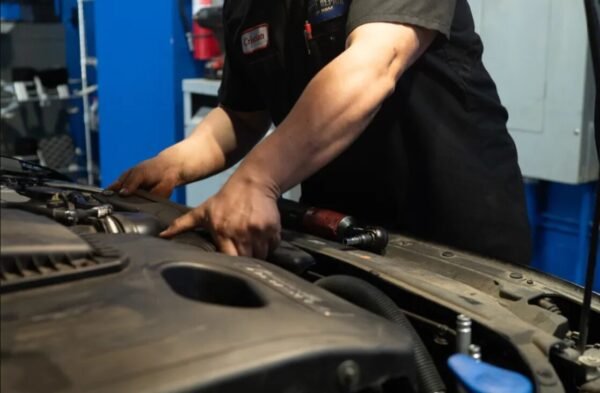
Let’s cut through the hype. Every shop today claims to have “advanced tools.” That means nothing if human expertise is missing from the equation. Because technology without thinking is just expensive guessing.
As technology produces data and diagnostic results, car repair experts step in to catch what machines can’t—context, contradiction, and hidden cause. What separates true specialists is how they use technology:
- Diagnostics as translation, not decoration: Tools don’t decide, the technician interprets
- Warranties that actually mean something: Long-term coverage isn’t a sales trick, it’s confidence backed by process
- Inspections that go beyond compliance: Not just “pass or fail,” but “what’s silently degrading?”
This is the difference between reading results and interpreting reality. Because the real issue is rarely loud or obvious. Systems might have diagnostic gaps in the things that don’t quite add up. And it takes someone willing to question the first answer, challenge the easy fix, and follow the problem all the way back to its source.
- Expertise Culture: Where the Skills Factor Meets Accountability
You can have all the tools in the world, but if the mindset is average, the results will be too. What makes premium car repair centers like London Bridge Auto And Transmission Repair Shop Virginia Beach different isn’t just skilled repair work, it must blend with disciplined thinking applied to machines.
That means a car repair culture where:
- Learning never stops: They stay ahead of changes instead of reacting to them
- Details are non-negotiable: Every bolt, every fluid, every setting matters
- Communication is part of the service: You’re not talked at—you’re brought into the decision
And here’s why this matters for you: Because when people take pride in their work, you feel it. In how your car drives. In how clearly things are explained. In how problems don’t keep coming back. If you’ve ever left a repair shop feeling unsure, rushed, or slightly confused—that’s not normal. That’s a gap in professionalism. And you deserve better than that.
- Digital Twin and ADAS Calibration: The Invisible Layer You Can’t Ignore
Cars aren’t just mechanical anymore, they are software-defined machines. Ignoring that is a costly mistake. That means traditional mechanical repairs are now incomplete and potentially dangerous without precise digital synchronization.
There’s an entire digital layer running beneath what you see. And if it’s out of sync, your car might still run; but it won’t run right.
This is where things get serious:
- ECU recalibration: Your engine isn’t just hardware—it’s software-controlled. Experts undertake updates of engine control unit which helps refine timing of auto processes, engine efficiency, and responsiveness to your actions.
- ADAS alignment: Is crucial because safety systems rely on precision, not approximation. A slight misalignment can quietly reduce protection
- Predictive data analysis: It’s about how cars now generate signals that allow experts to understand it. Cars communicate their own wear and inefficiencies. The question is: is anyone actually listening?
Individually, a slight drop in fuel efficiency, a small delay in gear shifts, and minor fluctuations in voltage or pressure may not mean much to car owners or divers. But together, they form a pattern that needs interpretation. With the right expertise, it becomes foresight—knowing what’s about to go wrong before it actually does.
In essence, when it comes to car care, you must raise your standard; or pay for it later. At some point, every driver has to decide what kind of experience they’re willing to accept. Quick fixes will always exist, but they come at a cost that shows up later, usually when it’s least convenient. Choosing specialization isn’t about spending more. It’s about refusing to settle for less than precision, clarity, and control.